
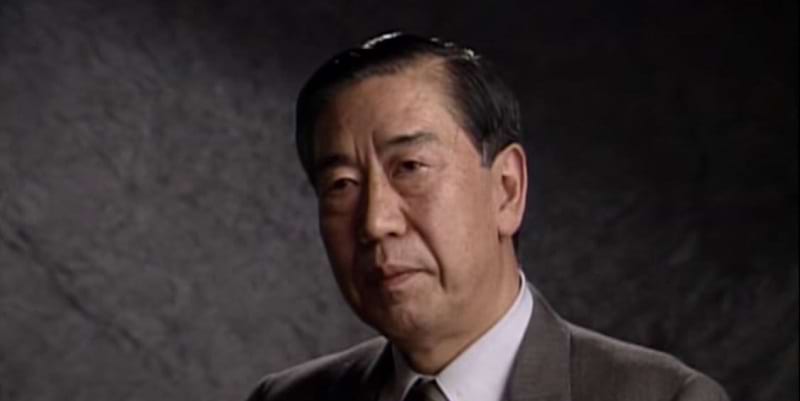

In the 1950s, a Japanese engineer named Genichi Taguchi revolutionized manufacturing with a simple, counter-intuitive insight: you cannot inspect quality into a product. By the time a product hits the assembly line, it is too late. Quality must be designed into the process itself.
Taguchi’s philosophy, now known as Robust Design, was originally intended to help manufacturers build components that functioned perfectly despite uncontrollable environmental variables—what he called "Noise."
Today, B2B marketing faces an engineering problem that Taguchi would recognize immediately. Whether you are building an audience from zero or managing a massive following, the core challenge is the same: Uncertainty.
We are often guessing. We treat every LinkedIn post as a bespoke prototype, launching it into the "Noise" of the algorithm and hoping for the best.
To solve this, we need to stop thinking like artists and start thinking like quality engineers. We need to move from linear production to the Taguchi Method.
At the core of the Taguchi method is the Signal-to-Noise (S/N) Ratio.
In traditional "linear" content production (one script = one video), the system is fragile.If you have a large audience, you might get engagement, but you often don't know why. Was it the topic? The hook? Or just a lucky time slot?If you are building an audience, the risk is even higher. You might spend budget on high-production assets that miss the mark entirely, burning runway before you find your signal.
Taguchi argued that instead of trying to eliminate noise, you should design a system that is insensitive to noise. You do this by optimizing Control Factors—the variables you can change.
Taguchi developed Taguchi Designs (specialised orthogonal arrays) to test multiple variables simultaneously with a minimum number of experiments. Instead of running 1,000 separate tests to find the perfect tire design, an engineer could run 18 strategic combinations to get the same data.
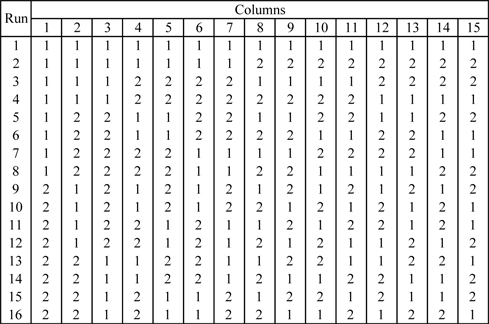
We have adapted this into a content framework called the 1:36 Rule. It is essentially an L36 Taguchi Design for video production. By treating a single 8-hour filming day as a data capture session, we create the grid required for rapid validation.
We capture two distinct Control Factors:
1. The "Nominal" Baseline (Authority)First, we capture 18 Core Concepts. These are your 'Nominal-the-best' targets - pure value, deep expertise, no gimmicks. These serve as your Control Group.
2. The Variation Parameter (Optimization)For every Core Concept, we film a 'Variation Hook' - a second version with a different creative variable (e.g., a provocative statement vs. a data-led opening).
The power of a Taguchi Design is that it allows you to learn faster than your competition. It creates a feedback loop that serves both sides of the market:
For the Builders: The ' Fail Fast' Mechanism.
When you are building, speed is your currency. You cannot afford to spend three months producing a polished series that nobody wants.With this framework, you run 36 simultaneous "micro-experiments" immediately. You might find that your audience ignores philosophical takes but engages deeply with tactical advice. You learn this in Week 2, not Week 12. You stop spending budget on the wrong message.
For the scalers: Isolating the variable.
If you already have an audience, your problem is not 'getting views' it is repeatability. You are likely posting sporadically, getting mixed results, and relying on intuition.The Taguchi Design isolates the variables. If you post Topic A (Core) and Topic A (Variation), and only the variation works, you have scientifically proven that your hook was the driver, not just the topic. You can now engineer that hook into every future asset.
Once the testing framework identifies the winning parameters, we deploy the Echo Strategy to maximize the S/N ratio over time:
To the algorithm and the audience, these are two distinct "experiments." But because they share the same DNA, they reinforce the message. This ensures that even if "Noise" (a busy news cycle) kills the first post, the second post survives.
The 1:36 Rule is not just a scheduling hack; it is an application of Parameter Design.
By applying a Taguchi Design to your content, you stop guessing. You build a content engine that generates its own performance data, allowing you to validate ideas cheaply and scale the winners with precision.
You do not need to work harder to be consistent. You need to engineer a better system.
Learn more